It’s 2025 and Charlie Kirk of Turning Point USA has embarked on another college campus tour — “The American Comeback” tour. As he travels from campus to campus to spread information and garner support for far-right policies, the Rad Little Library is here to help you stay informed.
What is propaganda? How can I learn to recognize it, understand its manipulative tactics, resist its influences, and avoid being sucked into the far-right pipeline?
The Far-Right Pipeline
The far-right (or alt-right) pipeline refers to methods of right-wing radicalizing. There are numerous pipeline pathways (Crunchy Moms and Gamer Guys to name a couple). Youth and young adults are a major target of far-right propaganda, as evidenced by PragerU (aka Prager University) — the ultra-conservative, centralized media organization fueling American far-right propaganda.
PragerU unites different factions of the Republican voter base — Reaganites, Bush-Era Republicans, Tea Partiers, and far-right extremists. Using its immense financial power, PragerU inundates its target audience with far-right content that appears to be reasonable, authoritative, and factual. To learn more about PragerU’s propagandist strategies, view the presentation slides and notes below.
The presentation below was delivered at a teach-in at the Channing Murray Foundation in Urbana, Illinois on April 7, 2025.
Core Readings
Dickinson, Rob, and Cowin, Tom. “The CRT Moral Panic and PragerU’s role in it: reflections from researchers.” The Bell Ringer, 2022. Read it here.
Dickinson, Rob, and Cowin, Tom. “The Alt-Education Pipeline: PragerU.” Human Restoration Project, August 2022. Read it here.
Stanley, Jason. How Propaganda Works. Princeton, New Jersey ; Princeton University Press, 2015. Find it in a library near you!
Suggested Media
Take Action
Here are some key actions and tools to help you and your community resist propaganda.
Familiarize Yourself with Critical Scholarship
Critical Theory “refers to a family of theories that aim at a critique and transformation of society by integrating normative perspectives with empirically informed analysis of society’s conflicts, contradictions, and tendencies.” (Stanford Encyclopedia of Philosophy)
Critical Pedagogy “embraces the belief that educators should encourage learners to examine power structures and patterns of inequality through an awakening of critical consciousness in pursuit of emancipation from oppression.” (Rollins School of Public Health)
Suggested Readings
Bell, Derrick. Faces at the Bottom of the Well : The Permanence of Racism. New York, NY: BasicBooks, 1992. Read it for free online.
hooks, bell. Feminist Theory : From Margin to Center. 2nd ed. Cambridge, MA: South End Press, 2000. Read it for free online.
hooks, bell. Teaching to Transgress : Education as the Practice of Freedom. New York: Routledge, 1994. Read it for free online.
Freire, Paulo. Pedagogy of the Oppressed. Translated by Myra Bergman Ramos. New York: Herder and Herder, 1970. Read it for free online.
Foucault, Michel, and Robert Hurley. The History of Sexuality. Vintage books ed. New York: Vintage Books, 1990. Read it for free online.
Lorde, Audre. Sister Outsider: Essays and Speeches. New York: Crossing Press, 1984. Read it for free online.
Butler, Judith. Bodies That Matter : On the Discursive Limits of “Sex.” 1st ed. Abingdon, Oxon ; Routledge, 2011. Read it for free online.
Practice Self-Reflection
Information is NOT NEUTRAL. Consider how you discover, interact, and share political information in your daily life. Examine your beliefs and ideas about race, gender, sexuality, and class.
- Does critical scholarship make you uncomfortable? If so, why?
- Have you heard that “Marxism” and “Critical Race Theory” are inherently bad? Who have you heard this from? Why do you think they believe that or want you to believe that? Have you read it for yourself?
Learning to recognize, unpack, and actively correct our prejudices and biases is a process. Self-reflection is an essential aspect of liberation work.
Build Your Information Literacy Skills
The Association of College and Research provides a (free) handy guide outlining the six core concepts of information literacy. Called “frames,” these concepts are:
- Authority Is Constructed and Contextual
- Information Creation as a Process
- Information Has Value
- Research as Inquiry
- Scholarship as Conversation
- Searching as Strategic Exploration
Evaluate Your News Sources
In the digital age, we are inundated with information. It can be challenging to decide which sources are credible and factual. Great news! There’s a tool for that:
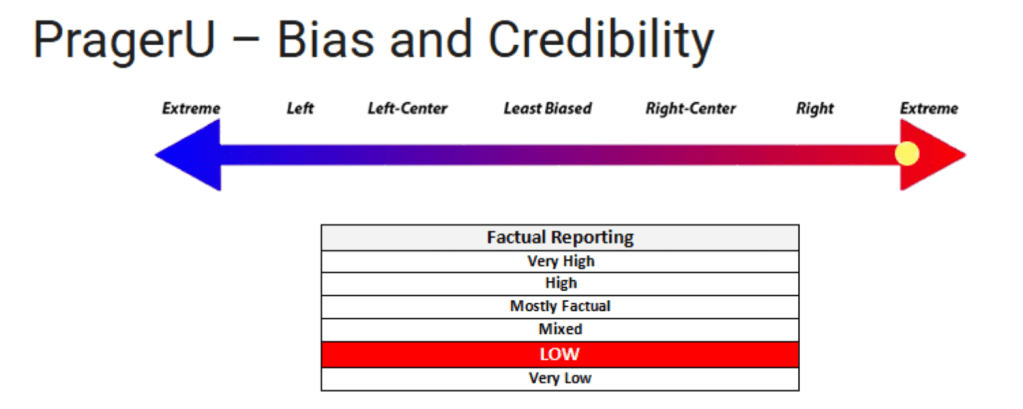
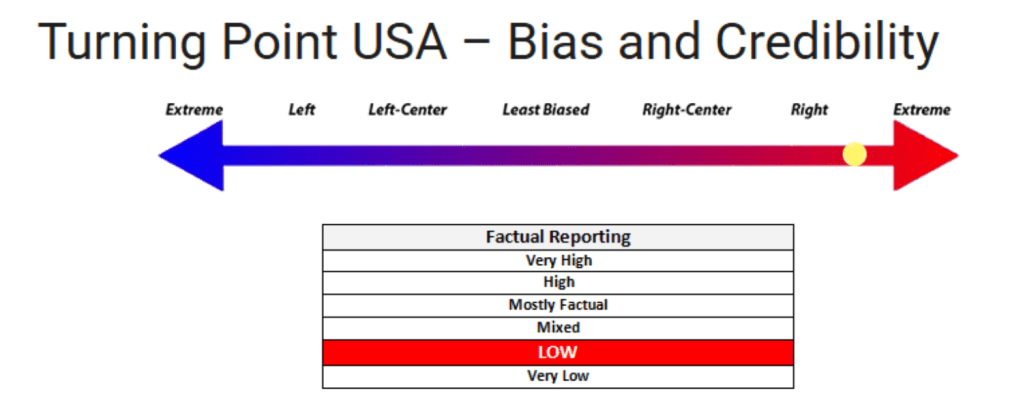
Media Bias / Fact Check
This independently funded online database contains profiles for nearly 10,000 news outlets, reporters, and politicians. Each profile provides rankings for media bias and factual credibility with a detailed analysis of reporting practices and content. Media Bias/Fact Check provides transparent information on their funding and analytic methodologies.
Recognize Dog Whistles
Dog whistles are political messages with alternative meanings, which are often used to erode empathy and dehumanize marginalized populations. It is a sort of code-switching that allows far-right extremists and white supremacists to “say the quiet part out loud” while maintaining plausible deniability about the true nature of their speech.
Examples of Dog Whistles
Transgenderism: This term is a subtle dehumanization of transgender and gender non-conforming people. Far-right extremists don’t believe that trans people exist (or should exist) — so instead, they use “transgenderism” to signal that transness is ideological and not a legitimate way of being in the world.
Barack Hussein Obama: Far-right extremists and white supremacists love to state President Obama’s full name, with an added emphasis on his middle name “Hussein.” This dog-whistle serves to de-legitimize Obama’s authority as a former head of state and signal to listeners that he is different, un-American, and even a traitor with ties to the Middle East. The use of President Obama’s full name stems from conspiracy theories created by far-right groups to misinform the public about Obama’s citizenship status.
The Welfare State: Since the Civil Rights Movement, it has become increasingly difficult for white supremacists to use racial slurs in public discourse. The creation of terms like “the welfare state” uses race-neutral language to refer to African Americans and other communities of color.
In addition to dog-whistles, the US has seen an uptick in public displays of white supremacist and domestic terrorist symbols in recent years. For exapmle, Marjorie Taylor Green
The Anti-Defamation League maintains an open database of hate symbols used by white supremacist groups. Similarly, the Southern Poverty Law Center provides a database on extremist groups and ideologies.
Print & Share
To help spread the word about political misinformation and propaganda, print and share RLL’s Far-Right Pipeline zine. Just print, fold, and share using the button below.
 Rad Little Library